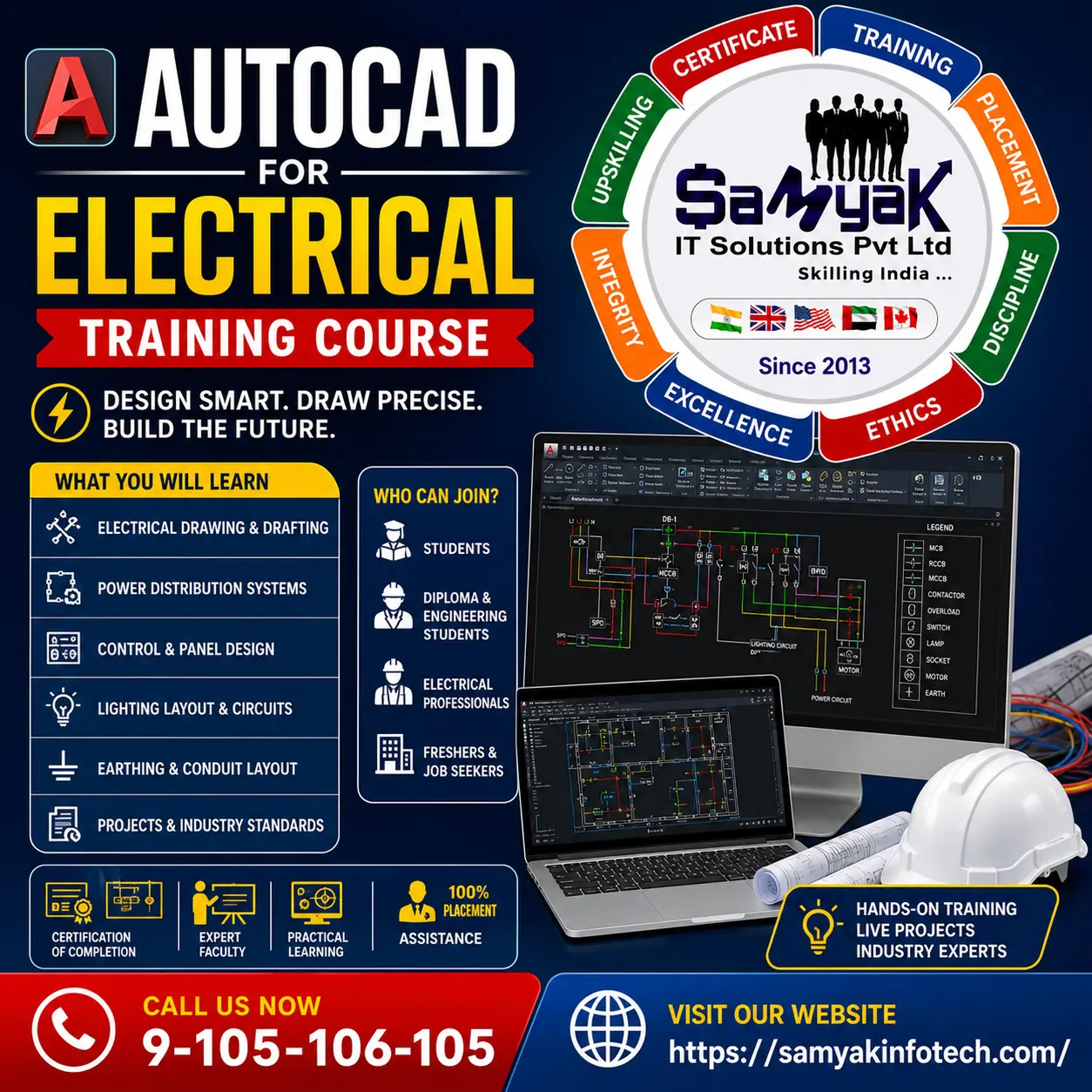
About This Course
The foundational infrastructure supporting modern industrial blueprint formulation stands as a premier educational platform meticulously optimized for technical graduates, polytechnic scholars, network layout coordinators, engineering supervisors, and corporate practitioners who intend to establish exceptional operational mastery over computerized asset documentation. Within the contemporary corporate environment, commanding sophisticated graphical processing interfaces has transitioned into an indispensable baseline requirement across municipal, commercial, and industrial operational frameworks. This deeply detailed instructional landscape provides technical personnel with the capabilities required to generate highly accurate control hub enclosures, multi-tiered circuit pathways, intricate programmable logic matrices, and expansive technical records with total precision. Cultivating a deep understanding of these professional methodologies opens extensive corporate pathways within regional distribution grids, automated manufacturing frameworks, heavy industrial zones, structural assembly facilities, and large-scale public utility developments across the globe.
The international demand for technical analysts who excel in digital schematic planning is rising exponentially as contemporary enterprises entirely discontinue traditional manual drafting procedures in favor of pure digital documentation formats. Forward-thinking companies actively recruit experts who can execute immaculate spatial management models, custom switchgear arrays, comprehensive electrical load distribution matrices, exact conductor sizing sheets, and high-density operational records via advanced drafting applications. This highly extensive educational outline provides enrolled learners with highly specialized, practical capabilities that translate instantly into operational efficiency on the production floor, transforming them into vital assets for any industrial planning department or corporate development group right from day one.
One of the most profound benefits of mastering this specific digital canvas is its universal application across multiple market sectors across every major international region. Top-tier consulting agencies, international procurement corporations, automated manufacturing plants, regional power networks, heavy equipment assembly lines, and technical installation firms employ these identical methodologies as a day-to-day operational standard. This structural uniformity allows global corporate teams to formulate highly detailed asset blueprints that fully satisfy strict international engineering benchmarks. Consequently, it guarantees that complex technical data sets developed by layout artists in one country can be effortlessly reviewed, interpreted, and physically constructed by field engineers anywhere else in the world without any risk of miscommunication.
The structured learning pathway starts with an exhaustive breakdown of the fundamental operational mechanics governing digital design architecture. Entry-level students and mid-career practitioners initiate their training by mastering workspace setup optimizations, geometric asset attributes, precise coordinate entry systems, multi-layered organization strategies, professional annotation features, standard dimension formatting rules, and secure project file archiving protocols. Developing deep technical accuracy during these preliminary modules instills immense user confidence and operational precision before individuals move forward toward studying complex production blueprints, detailed circuitry paths, and industry-standard documentation workflows.
Circuit mapping logic constitutes one of the most vital segments addressed throughout the entire comprehensive learning roadmap. Enrolled individuals learn the precise operational steps involved in building professional single-line diagrams, secondary control loop schematics, motor terminal arrangement schedules, distribution substation plans, and physical protection enclosure mockups. These vital graphical readouts serve as the primary operational blueprints for automated processing plants, high-rise office towers, and massive generation centers. As a result, securing an absolute command over these visual assets unlocks immediate access to premium engineering positions within high-paying industrial sectors.
The training framework also dedicates an immense amount of instructional runtime to component libraries and automated asset management systems. Students learn how to smoothly navigate thousands of pre-configured graphical assets, switching mechanisms, circuit isolation breakers, current transformers, industrial contactors, distribution terminal rails, logic microprocessors, and interconnected field hardware elements. Mastering the exact placement and alignment of these crucial items while strictly respecting international formatting standards ensures that the final technical package is immaculate, easy to read, and fully approved for the physical construction phase.
Enclosure configuration and spatial optimization represent another major, deep-dive module within this professional technical pathway. Enrolled participants gain the necessary skills to systematically organize primary electrical control centers, centralized motor control arrays, main power distribution boards, heavy-duty switchgear configurations, terminal block sequences, internal wiring duct networks, and localized panel documentation records. These highly practical capabilities thoroughly prepare individuals for challenging, high-responsibility positions within automated plant operations and equipment manufacturing yards, where minimizing physical footprints through spatial optimization is treated as a top corporate priority.
Programmable logic controller integration is another crucial component that is unpacked with incredible detail throughout these strategic learning segments. Students learn how to manage complex input/output allocation matrices, ladder logic control path representations, physical system module orientations, field wiring connection loops, and overarching automation records. This highly specialized technical expertise is heavily targeted by industrial recruiters managing continuous manufacturing plants, chemical processing facilities, and automated robotic assembly lines where high-speed programmable controllers drive the entire continuous production stream.
Conductor allocation and physical routing records form another structurally critical cornerstone of this exhaustive technical curriculum. Learners discover how to compile deep conductor tracking schedules, alphanumeric wire label sequences, terminal strip maps, detailed cross-reference indexes, and exhaustive bill of materials spreadsheets. Developing disciplined, hyper-detailed documentation habits helps eliminate expensive errors during actual field installation, protects the long-term operational integrity of the network, and significantly simplifies future field validation audits, diagnostic operations, and routine preventative field maintenance.
A defining characteristic of this entire learning experience is its total reliance on practical, project-backed learning strategies. Rather than merely spending time memorizing abstract application commands or software shortcuts, participants are continuously challenged with real-world technical assignments. These include residential power distribution grids, massive multi-story commercial complex layouts, heavy-duty manufacturing control centers, automated robotic factory floors, and advanced building management frameworks. These real-world projects teach students workforce-ready habits while helping them build a versatile, professional project portfolio that they can confidently showcase to prospective corporate hiring teams.
The advanced instruction modules also go deep into global layout standards, complete lifecycle documentation tracking, custom title block setups, multi-sheet package administration, strict version revision control, advanced printing configurations, high-density line plotting, and secure digital document delivery methods. Becoming an expert in record management is completely non-negotiable because these project blueprints serve as the definitive contract documents for corporate financial approvals, field construction staging, and long-term facility asset auditing.
Real-time synchronization with advanced spreadsheet applications and built-in automated reporting engines is another premium operational skill taught during these advanced sessions. Learners understand how to dynamically extract data models to generate detailed material registries, wire destination manifests, component tag summaries, and connection terminal status updates instantly from active models. This powerful automation maximizes everyday engineering output, completely eliminates manual text-entry mistakes, and dramatically speeds up the material procurement and supply chain cycle for major engineering firms.
Graduating from this elite technical pathway opens spectacular, high-paying career avenues across multiple booming global sectors. Achievers can seamlessly transition into professional roles as Industrial Layout Coordinators, Project Delivery Leads, Control Panel System Experts, Technical Advisors, Infrastructure Planners, and Automated Manufacturing Specialists. Because flawless digital blueprinting has transformed into a mandatory quality standard for modern civil and industrial projects, job applicants backed by verified portfolio experience routinely secure premium employment offers, enhanced compensation packages, and rapid promotions into senior management positions.
Active industrial field practitioners also stand to gain immense career advantages from these comprehensive training blocks by modernizing their software toolkit and qualifying for advanced executive design office positions. Field line technicians, maintenance technicians, and construction site supervisors frequently utilize this targeted instruction to sharpen their theoretical understanding of design standards and successfully transition away from hazardous outdoor field labor into stable, high-paying corporate office environments.
An additional long-term value of this intensive coursework is that it establishes an ideal technological springboard for adapting to secondary high-end software ecosystems, including Revit MEP platforms, EPLAN Electric P8 engineering tools, ETAP network modeling systems, SolidWorks simulations, and unified Building Information Modeling (BIM) architectures. Gaining a deep baseline command over structural layout principles ensures that professionals can rapidly absorb these advanced platforms, expanding their total career reach within network engineering and digital construction while outpacing changing market trends.
Independent design consulting also offers highly profitable returns upon concluding this educational validation. Specialists can easily market standalone corporate services such as custom schematic blueprint creation, structural enclosure mapping, complex interconnection documentation, mechanical-electrical-plumbing (MEP) coordination, and historical paper archive digitization for international enterprises across global talent networks.
This structured educational framework is perfectly optimized for engineering academics, polytechnic graduates, newly qualified practitioners, field inspectors, system planners, automation enthusiasts, and ambitious career seekers. Because the instructional flow moves logically from bare workspace fundamentals toward complex industrial applications, anyone possessing foundational technical aptitude can complete the objectives with high distinction.
As international infrastructure development, automated assembly shifts, green energy conversion projects, and intelligent urban structures continue to scale up on a global level, the market desire for professionals who command these modern tools remains exceptionally high. Forward-thinking companies actively recruit experts capable of producing meticulous industrial blueprints, driving operational performance upward, and steering multi-faceted engineering projects home using industry-standard applications.
For individuals determined to construct a highly rewarding, resilient career path in layout formulation, advanced automation architectures, utility network balancing, or technical systems consultancy, committing to this advanced program represents a foundational career choice. The curriculum delivers actionable capabilities, authentic industrial project exposure, certified layout command, and a direct gateway to premier job opportunities.
This exhaustive learning matrix is intentionally balanced to transition participants into seasoned technological professionals through direct, hands-on immersion in circuit schematics, enclosure planning, connection logic, system records, automated analytics, and actual industrial scenarios. Whether your definitive target is to operate as an infrastructure coordinator, an automation pioneer, or a specialized layout expert, mastering these digital workflows delivers the necessary technological edge, functional command, and professional posture required to thrive across today's highly competitive industrial landscape.






 Placement Statistics
 Next Batch:New batches start every 7th day. Limited seats available – enroll early!
 Course Duration:2 Month (including hands-on circuit design and schematic projects)
 Eligibility:
 Tools:
 Modes of Training:Online Classes/Offline Training (at selected centers)
 Projects:Available