About This Course
The MS Project Course is one of the most valuable professional training programs for students and working professionals who want to build careers in project management, business operations, planning, and team coordination. In modern industries, organizations handle multiple projects simultaneously, and efficient project planning has become essential for successful business operations. Companies now require skilled professionals who can manage tasks, timelines, resources, budgets, and project workflows effectively. This MS Project Course is specially designed to help students learn practical project management skills using Microsoft Project, one of the most widely used project management tools in the corporate world.
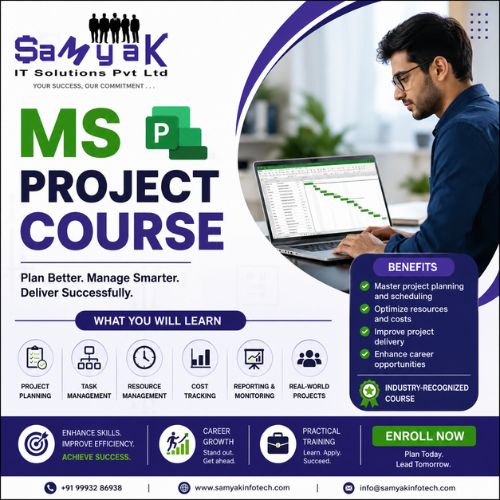
The MS Project Course focuses on practical learning and real-world project management techniques. Students learn how to plan projects, create schedules, manage tasks, allocate resources, track progress, control budgets, and monitor deadlines using Microsoft Project software. The course provides complete knowledge of project planning methodologies and helps students understand how organizations manage projects professionally across industries such as construction, IT, manufacturing, engineering, healthcare, finance, and business operations.
Project management is an important part of every industry because businesses need proper planning to complete projects on time and within budget. Without effective project management, organizations often face delays, cost overruns, communication problems, and resource conflicts. This MS Project Course helps students understand how structured planning and professional project management improve business productivity and operational efficiency.
One of the biggest advantages of joining an MS Project Course is that Microsoft Project is widely used by companies for project scheduling and resource management. Learning this software increases job opportunities because organizations prefer candidates who understand professional project planning tools. Students who complete the MS Project Course can work as Project Coordinators, Project Planners, PMO Analysts, Planning Engineers, Project Administrators, and Operations Executives.
The MS Project Course starts with the fundamentals of project management and gradually moves toward advanced project planning concepts. Students learn how to create project timelines, define tasks, assign resources, estimate project durations, create dependencies, monitor milestones, and track project performance. The course also introduces students to concepts such as Work Breakdown Structure (WBS), Gantt Charts, Critical Path Method (CPM), project scheduling, and workflow optimization.
Gantt Charts are one of the most important features covered in the MS Project Course. Students learn how to visually manage project timelines and monitor project progress using Gantt Charts. These charts help managers understand task sequences, deadlines, dependencies, and project status clearly. Gantt Charts are commonly used in construction projects, IT software development, marketing campaigns, manufacturing operations, and business management processes.
Resource management is another important topic included in the MS Project Course. Students learn how to allocate resources efficiently, manage team workloads, avoid scheduling conflicts, and optimize productivity. Organizations depend heavily on resource planning because improper resource allocation can cause delays and budget issues. This course teaches practical resource management techniques used in professional project environments.
The MS Project Course also focuses on project budgeting and cost management. Students learn how to estimate project costs, monitor expenses, control budgets, and track financial performance throughout project lifecycles. Budget management skills are highly valuable because companies want professionals who can manage projects cost-effectively and improve operational efficiency.
Risk management and project monitoring are also essential areas covered in the MS Project Course. Students learn how to identify project risks, analyze potential issues, create backup plans, and maintain project stability. Understanding project risks helps organizations avoid delays, resource problems, and operational failures.
Another major advantage of the MS Project Course is its relevance across multiple industries. Project management skills are useful in IT companies, construction firms, manufacturing industries, healthcare organizations, engineering companies, logistics businesses, and government projects. Professionals with project planning knowledge are highly valued because every organization needs efficient project coordination and workflow management.
The MS Project Course is also highly beneficial for working professionals who want career growth in management and operations roles. Employees who understand project planning and task management often receive leadership opportunities because they can handle responsibilities more effectively and improve team productivity.
Team collaboration and communication are important parts of project management, and the MS Project Course helps students understand how project teams work together to achieve goals. Students learn how to assign responsibilities, monitor team performance, track deliverables, and maintain communication within project environments. Strong coordination skills improve project success rates and operational performance.
The MS Project Course follows a practical learning approach where students work on real project scenarios, scheduling exercises, resource management tasks, and project reporting assignments. Practical implementation helps students gain confidence in handling professional project management responsibilities and improves their software expertise.
Another important benefit of the MS Project Course is that it improves organizational and time management skills. Project managers must handle multiple tasks, deadlines, and team activities simultaneously. This course helps students develop planning abilities, decision-making skills, analytical thinking, and workflow management capabilities required in professional environments.
The demand for project management professionals continues increasing because organizations are managing larger and more complex projects every year. Businesses need professionals who can coordinate operations, manage timelines, and ensure successful project completion. This creates excellent career opportunities for students trained in Microsoft Project and project management methodologies.
The MS Project Course is suitable for beginners, engineers, management students, operations professionals, business analysts, team leaders, and working professionals interested in project management careers. Even students without prior project management experience can learn effectively because the course starts with project management basics and gradually moves toward advanced planning techniques.
The course also helps students understand professional reporting and project documentation methods. Project reports are essential for tracking performance, updating stakeholders, analyzing progress, and supporting decision-making. Students learn how to generate project reports and dashboards using Microsoft Project tools.
Modern businesses now rely heavily on structured workflows, digital project management systems, and operational planning tools. This makes project management one of the most important business skills in today’s competitive market. Professionals with MS Project expertise often gain better career opportunities and leadership roles in organizations.
Freelancing and consulting opportunities are also available for skilled project management professionals. Companies frequently hire project planners and coordinators for temporary assignments, construction planning, software project scheduling, and operational workflow management. Students who complete the MS Project Course can work independently as project consultants and planning specialists.
If you are interested in planning, management, business operations, team coordination, or leadership roles, then joining an MS Project Course can be an excellent career decision. The field offers strong industry demand, professional growth opportunities, management career paths, and long-term stability across multiple sectors.
This MS Project Course is designed to help students become industry-ready project management professionals by combining practical software training, project planning methodologies, workflow management skills, resource allocation techniques, and real-world operational knowledge. Whether your goal is to work as a project coordinator, planning engineer, operations manager, or project analyst, this course provides the right foundation for professional success and long-term career growth in project management and business operations.






 Placement Statistics
 Next Batch:New batch starts every 7th day, Enroll early t6o secure your seat.
 Course Duration:1 Month (Flexible timings available)
 Eligibility:
 Tools:
 Modes of Training:Online Classes/Offline Training (at selected centers)
 Projects:Available